
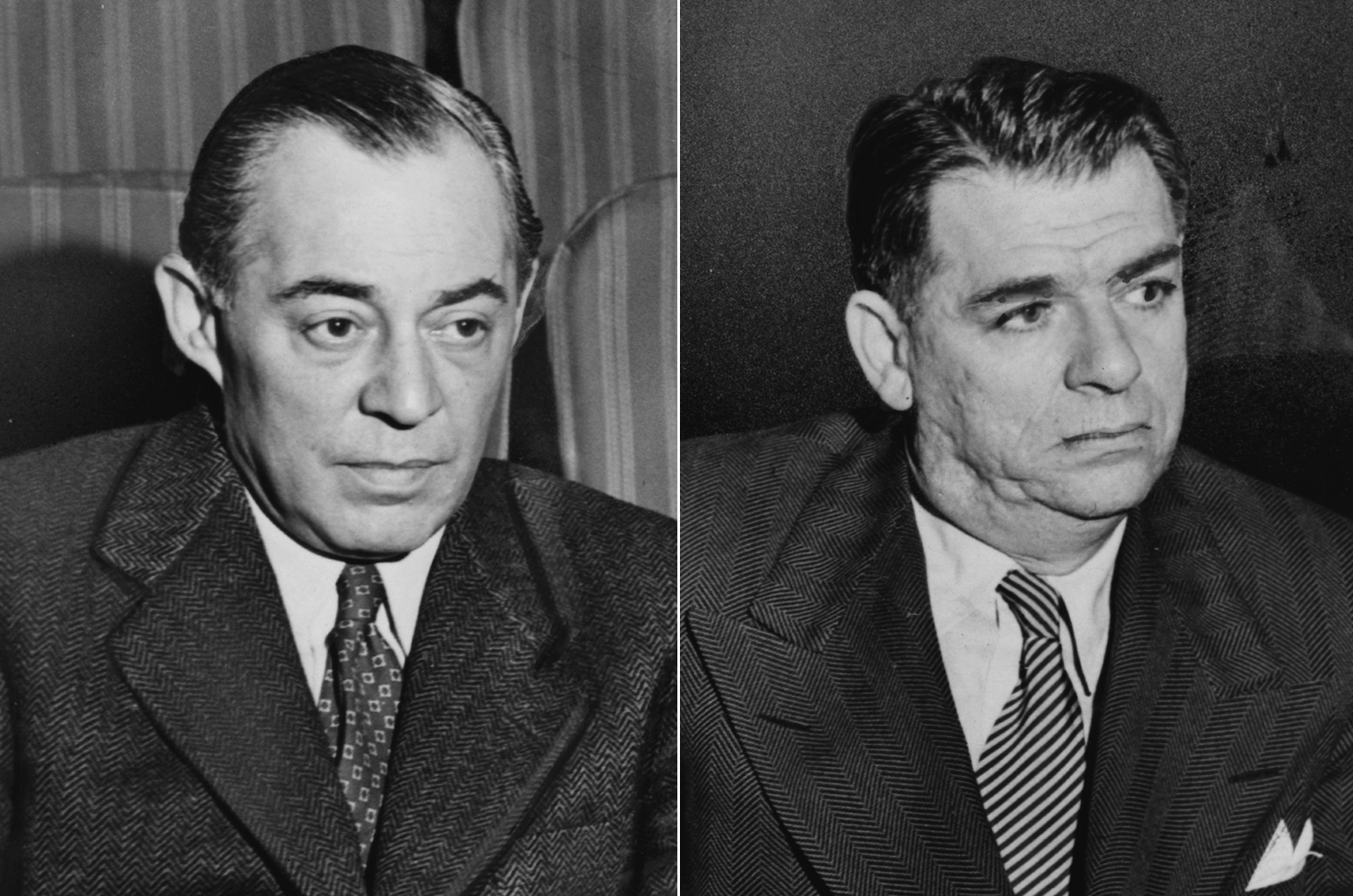
Rodgers and Hammerstein were an American songwriting partnership who wrote together from 1943 until Oscar Hammerstein II’s death in 1960. Richard Rodgers composed the music. Hammerstein wrote the book and lyrics. Together they created eleven stage musicals and one film musical that reshaped what the form could do.
Now. If you love musical theatre, really love it, then Rodgers and Hammerstein are inescapable. Their shows are everywhere. Am dram societies programme them constantly. Drama schools use them as training material. West End and Broadway revivals keep coming, decade after decade. And the songs. You know them even if you don’t know you know them.
I’ve been performing in musicals since 1994. I’ve loved this catalogue my entire life. And yet most of the content written about Rodgers and Hammerstein online either treats them like a history lesson or summarises them so broadly it tells you nothing useful. So this is my version. The enthusiast’s version. Written by someone who actually performs this material, watches it obsessively, and has very strong opinions about which shows deserve far more attention than they get.
This guide covers everything: who they were, why they changed everything, every show they wrote, the best songs, what it’s actually like to perform their work in amateur theatre, and the shows history has largely forgotten but really shouldn’t have.
Pour yourself something. Let’s get into it.
Who Were Rodgers and Hammerstein? The Men Behind the Music
They didn’t start together. That’s the first thing worth knowing.
Richard Rodgers spent the 1920s and 1930s writing music for Lorenz Hart’s witty, often cynical lyrics. That partnership gave us Manhattan, My Funny Valentine, and The Lady is a Tramp. Brilliant work. But Hart was increasingly unreliable, struggling with alcoholism, and the partnership was fracturing badly by the early 1940s.
Oscar Hammerstein II had written the book and lyrics for Show Boat in 1927 alongside composer Jerome Kern. Show Boat was revolutionary for its time: a serious, integrated musical drama dealing with race and marriage. But after that early peak, Hammerstein had a long run of flops throughout the 1930s. By the early 1940s, most of Broadway had quietly written him off.
Then they found each other.
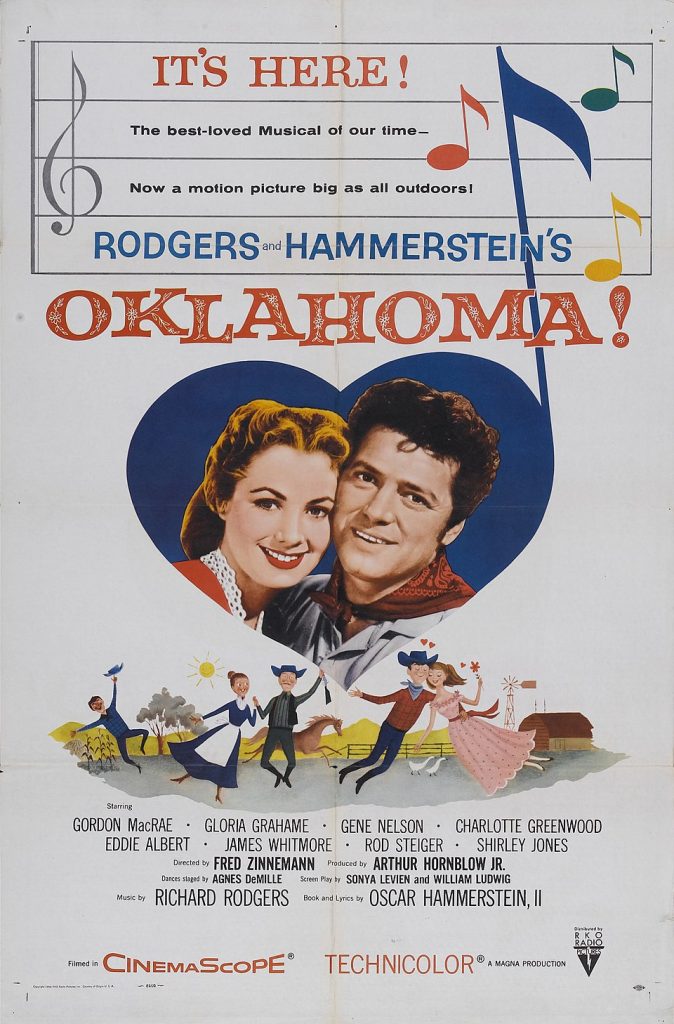
The project that brought them together was an adaptation of Lynn Riggs’s play Green Grow the Lilacs, which became Oklahoma! It opened in March 1943 and changed everything. Not just for them. For the entire form.
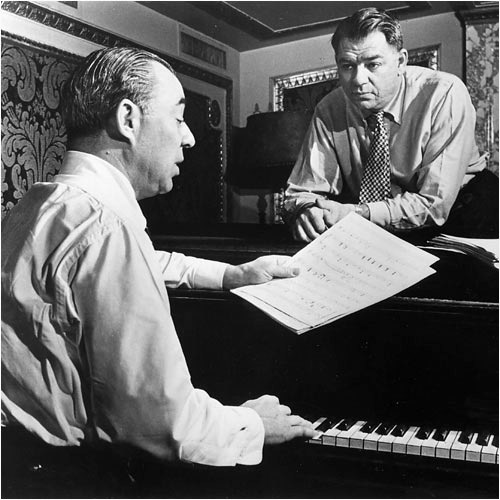
What made their partnership so unusual was the way they worked. Most songwriting teams write music first and fit lyrics around it. Hammerstein wrote the lyrics first. Complete poems, fully formed, with the story’s emotional logic built in. Then Rodgers set them to music. It sounds backwards. In practice it produced some of the most dramatically coherent songs ever written for the stage, because every lyric was doing theatrical work before a single note existed.
They were also very different personalities. Rodgers was precise, somewhat cool, not given to sentiment. Hammerstein was warmer, more philosophical, genuinely idealistic. That tension is part of what gives their best work its particular quality. Cool music under emotionally generous lyrics. The music restrains the sentiment just enough.
They wrote together for seventeen years, until Hammerstein died of stomach cancer in August 1960. Rodgers later worked with other lyricists but never recaptured what they had together. Some partnerships just are what they are.
Why Rodgers and Hammerstein Changed Musical Theatre Forever
Before Oklahoma!, the dominant form of American musical entertainment was the revue and the operetta. Songs existed to be entertaining. They paused the story, delivered a number, and then the plot resumed. Character and song were largely separate things.
Rodgers and Hammerstein broke that completely.
Their core innovation was the integrated musical: a show in which every song exists to advance character or story. Nothing is decorative. Nothing is filler. When Lady Thiang sings Something Wonderful in The King and I, it tells you everything about who she is and what she has chosen to accept. When Billy Bigelow sings Soliloquy in Carousel, you watch a man’s entire character shift in real time across eight minutes of music. These are not showstoppers slotted into a plot. They are the plot.
The other thing they did that nobody had done quite so boldly was take the musical seriously as a form for exploring difficult ideas. Here is what that looked like in practice:
South Pacific (1949) dealt directly with racism and racial prejudice in the American military. The lyric You’ve Got to Be Carefully Taught was so controversial that some US states tried to have it banned.
Carousel (1945) explored domestic violence, working class despair, and what it means to love someone who hurts you. In 1945. In a musical.
The Sound of Music (1959) used the warmth of the Von Trapp story to frame a genuinely tense narrative about fascism and escape.
They also brought dance into the storytelling in ways it had not been used before. The dream ballet in Oklahoma!, choreographed by Agnes de Mille, used movement to express Laurey’s unconscious fears in a way dialogue never could. It is fifteen minutes long and it changed what dance was allowed to do in a musical.
The shadow they cast is enormous. Sondheim studied under Hammerstein. Lloyd Webber built on the integrated model. Every contemporary composer writing book musicals is working in a tradition Rodgers and Hammerstein largely invented.
Were they perfect? No. Some of their shows have dated in places, particularly around gender and certain cultural representations. The revivals that land best tend to be the ones that find a way to interrogate that alongside celebrating the craft. That is a conversation worth having, not avoiding.
But the craft itself is extraordinary. And if you spend time in amateur theatre, you will spend time in Rodgers and Hammerstein. Guaranteed.
Every Rodgers and Hammerstein Musical: The Complete List
Here is every musical they wrote together, in order.
Oklahoma! (1943) The one that started everything. Set in the Oklahoma Territory at the turn of the century, it follows farm girl Laurey torn between two men. The first R&H collaboration and still arguably the most revolutionary. The dream ballet alone earns its place in history.
Carousel (1945) Widely considered their masterpiece and also their most challenging show. A fairground barker dies in a botched robbery and gets one day back from heaven to make things right. Dark, genuinely moving, and home to You’ll Never Walk Alone. Not easy viewing. Completely worth it.
State Fair (1945) The only Rodgers and Hammerstein musical written directly for film rather than stage. Set at the Iowa State Fair, it is lighter in tone than most of their work: warm, funny, and charming. It has been adapted for stage since, but the film is where it lives best.
Allegro (1947) The forgotten one. An experimental show following a doctor from birth to middle age, using a Greek chorus and abstract staging that was decades ahead of its time. It divided critics, ran for less than a year, and has rarely been revived since. Fascinating.
South Pacific (1949) A love story set against the backdrop of World War Two in the Pacific Islands, with two parallel romances both complicated by racial prejudice. Won the Pulitzer Prize for Drama. Some of R&H’s finest music and some of their most important lyrics.
The King and I (1951) Based on the real story of Anna Leonowens, a British schoolteacher who arrives at the court of the King of Siam. Spectacular staging, Shall We Dance, Getting to Know You. Requires real resources to do it justice. Worth every penny.
Me and Juliet (1953) A musical set backstage at a musical. Meta before meta was a thing. Not their strongest work but warmer and funnier than its reputation suggests. Rarely staged, which is a shame.
Pipe Dream (1955) Their only real critical and commercial flop. Based on John Steinbeck’s Sweet Thursday, set in Cannery Row with a cast of loveable misfits. Hammerstein himself admitted it did not quite work. Still has some beautiful music in it.
Cinderella (1957) Written originally for television, specifically for Julie Andrews. Revised multiple times since, with a hit Broadway production in 2013. The original 1957 TV broadcast was watched by over 100 million people. Not bad for a Cinderella story.
Flower Drum Song (1958) Set in San Francisco’s Chinatown and one of the first Broadway musicals to feature a predominantly Asian-American cast. Culturally significant, musically rich, and almost never staged by amateur societies despite being genuinely accessible.
The Sound of Music (1959) The last show Hammerstein completed before his death. The most commercially successful R&H musical of all time, largely due to the 1965 film. On stage it is a bigger, darker, more complex show than most people expect. My Favourite Things, Climb Every Mountain, Edelweiss. You know them all.
The Best Rodgers and Hammerstein Songs: My Personal List
I want to be upfront: this is my list. Not a chart. Not a consensus. Mine. And I reserve the right to be controversial.
You’ll Never Walk Alone (Carousel) The most performed song in this entire catalogue and it is still not overrated. The trick is that in context, this is not a rousing anthem. It is a widow’s grief and a daughter’s inheritance and a whole community’s survival stitched into one melody. Spine-tingling every single time.
Soliloquy (Carousel) Eight minutes. One man’s entire emotional journey from swagger to terror to love. If you are a baritone and you have never listened to this, stop reading and go find it now.
People Will Say We’re in Love (Oklahoma!) The romantic heart of Oklahoma! and genuinely one of the most charming love songs ever written for the stage. Two people telling each other all the things they must not do, which of course is exactly how you know they are completely gone for each other. The specificity of those lyrics is Hammerstein at his very best.
Something Wonderful (The King and I) The song that does the most dramatic work in the whole R&H catalogue, for my money. Lady Thiang is defending an indefensible man and the lyric makes you completely understand why. Hammerstein at his most precise.
This Nearly Was Mine (South Pacific) Emile de Becque’s act two solo and one of the most heartbreaking songs R&H ever wrote. Rarely gets talked about in the same breath as Some Enchanted Evening but it absolutely should.
My Favourite Things (The Sound of Music) Yes, I know. It is obvious. But there is a reason it is everywhere. The melody is genuinely perfect and the lyric is doing something quietly clever: Maria is listing small comforts against fear and darkness, which is exactly who she is.
The Gentleman is a Dope (Allegro) Barely anyone knows this song and it is absolutely brilliant. A woman cataloguing all the reasons the man she loves is wrong for her, while obviously being completely in love with him. From the forgotten show everyone should listen to.
What would you add? I am fully prepared to be argued with in the comments.
Rodgers and Hammerstein for Amateur Theatre: What You’re Actually Taking On
Let’s be honest with each other here, because the internet is full of content that makes staging R&H sound straightforward. It is not always straightforward.
The vocal demands are serious. The soprano roles in particular: Laurey in Oklahoma!, Carrie in Carousel, Anna in The King and I, Maria in The Sound of Music. These are not roles you cast lightly. They are written for voices with real range and real stamina. That is not to say am dram performers cannot do them. Many absolutely can. But your casting decisions will define whether your production works or struggles, more than almost any other show you could choose.
The orchestrations are also a consideration. Full R&H orchestrations are large. Most amateur societies work with reduced arrangements, which vary considerably in quality depending on the show and the publisher. Worth doing your homework before you commit.
On the staging side, several of these shows are genuinely demanding. Oklahoma! has the dream ballet. The King and I has big ensemble numbers and needs strong dancers. The Sound of Music has children, which is always its own adventure.
Here is my honest guide to am dram accessibility:
- More accessible: The Sound of Music, Oklahoma!, South Pacific, Cinderella
- Requires real resources: The King and I, Carousel, Flower Drum Song
- Specialist territory: Allegro, Pipe Dream
The Sound of Music is the most commonly programmed R&H show in amateur theatre and for good reason. The audience already loves it. The songs are known. The emotional journey is clear. It is still hard to do well but the roadmap is well-trodden.
Carousel is the one I find most interesting as a performer because the material is so emotionally demanding. You cannot coast through it. The show asks something real of you, especially in the second act.
Whatever show you choose, my honest advice is this: take it seriously. These shows reward companies that commit fully and expose companies that treat them as a greatest hits package.
The Rodgers and Hammerstein Shows Nobody Talks About (But Should)
Right. This is the section I have been looking forward to.
Most Rodgers and Hammerstein content focuses on the same five shows. Oklahoma!, Carousel, South Pacific, The King and I, The Sound of Music. And yes, they are the five best known for a reason. But there is a whole other world in this catalogue that deserves attention.
Allegro is the one that genuinely surprises people who discover it. Written in 1947, it follows a doctor named Joe Taylor from birth through to middle age, tracking how he loses himself to ambition and social expectation before finding his way back. It used a Greek chorus, abstract sets, and direct address to the audience. In 1947. It was Hammerstein’s most personal show and he genuinely believed it was the most important thing he had ever written. Critics were divided. Audiences were uncertain. It closed after 315 performances, which sounds reasonable until you realise Oklahoma! ran for 2,212. It has barely been revived since and that feels like a real loss.
Pipe Dream is fascinating because it is the one that went genuinely, unambiguously wrong. Hammerstein adapted Steinbeck’s Sweet Thursday and set it among the vagrants and eccentrics of Cannery Row. On paper, perfect R&H territory: outsiders, big hearts, social commentary. In practice it never cohered. The leads lacked chemistry, the show ran too long, and Hammerstein admitted it himself. But the score has beautiful moments and any production brave enough to take it on now, with fresh eyes, might find something in it that the original missed.
Me and Juliet is the most underrated show in the catalogue. A backstage musical set during the run of a show called Me and Juliet. It is knowing, funny, and has a genuine theatrical energy that is different from anything else in their output. The reason it gets overlooked is that it came between The King and I and Pipe Dream and does not have the dramatic ambition of either. But on its own terms it is a really enjoyable show that would work brilliantly for an am dram company.
Flower Drum Song deserves particular mention because it is both culturally significant and practically achievable. The 2002 revised book by David Henry Hwang addressed some of the original’s more dated elements and created a genuinely strong modern version. The music is wonderful. And yet most am dram societies have never considered it. I think they should.
Rodgers and Hammerstein’s Legacy: Why It Still Matters
Hammerstein died in August 1960, eight months after The Sound of Music opened. Rodgers lived until 1979, writing shows with other collaborators but never reaching the same heights. The partnership was over but the legacy was already enormous.
The Rodgers and Hammerstein Organization continues to manage the licensing of their work today, alongside several other classic musicals. If you want to stage any of these shows you go through them, and they are known for being particular about production standards. That is not a criticism. It is a reflection of how seriously the estate takes the material.
The recent revival history is fascinating. The 2019 Daniel Fish production of Oklahoma! stripped back the staging, used naturalistic lighting, and turned the show into something genuinely unsettling. It divided audiences and critics in the best possible way. The 2015 Lincoln Center revival of The King and I with Kelli O’Hara and Ken Watanabe transferred to Broadway and the West End and reminded everyone what a properly resourced R&H production can achieve.
The current conversation in musical theatre about how to handle this catalogue is a live one. Some shows have material that has not aged well. The question of whether to revive them faithfully, reimagine them, or retire them is genuinely contested. My view is that the shows are strong enough to bear honest interrogation. The ones updated thoughtfully suggest the material can carry a modern lens without losing what makes it special.
Post-Hamilton, post-Hadestown, in a landscape where the integrated musical has gone to places R&H could not have imagined, their work still holds. The songs still land. The stories still move people. That is not nothing. That is everything, actually.
Rodgers and Hammerstein: Frequently Asked Questions
How many musicals did Rodgers and Hammerstein write together?
Rodgers and Hammerstein wrote eleven stage musicals and one film musical between 1943 and 1959. Their stage shows were Oklahoma!, Carousel, Allegro, South Pacific, The King and I, Me and Juliet, Pipe Dream, Cinderella, Flower Drum Song, and The Sound of Music. State Fair was written for film.
What was the first Rodgers and Hammerstein musical?
Oklahoma!, which opened on Broadway on 31 March 1943. Adapted from Lynn Riggs’s 1931 play Green Grow the Lilacs, it ran for 2,212 performances and is considered the first fully integrated book musical.
What is Rodgers and Hammerstein’s most famous musical?
By commercial reach, The Sound of Music, largely because of the 1965 film starring Julie Andrews, which remains one of the highest-grossing movie musicals ever made. By critical reputation, many would argue for Carousel or South Pacific.
What is the difference between Rodgers and Hammerstein and Rodgers and Hart?
Both were partnerships with Richard Rodgers as composer but with different lyricists. Lorenz Hart wrote witty, sophisticated, often melancholy lyrics with a more cynical worldview. Oscar Hammerstein II wrote more idealistic, emotionally open lyrics and also wrote the book: the spoken dialogue and overall dramatic structure. Rodgers and Hart produced revues and romantic comedies. Rodgers and Hammerstein created the integrated dramatic musical.
Did Rodgers and Hammerstein ever have a flop?
Yes. Pipe Dream in 1955 was their only genuine critical and commercial failure. Allegro in 1947 was also considered a disappointment relative to expectations, though it ran for over 300 performances. Hammerstein himself acknowledged that both shows did not fully achieve what he had intended.
Are Rodgers and Hammerstein musicals hard to stage?
It depends on the show. The Sound of Music and Oklahoma! are regularly performed by amateur societies and are well-supported with accessible arrangements. The King and I and Carousel are significantly more demanding in terms of vocals, staging, and resources. Allegro and Pipe Dream are rarely staged at any level and would require a specialist approach.
What is the easiest Rodgers and Hammerstein musical to perform?
The Sound of Music is the most commonly programmed R&H show in amateur theatre. The songs are widely known, the emotional arc is clear, and the audience goodwill is built in. Cinderella and Oklahoma! are also strong choices for societies newer to this catalogue.
Why did Rodgers and Hammerstein stop writing together?
They did not choose to stop. Oscar Hammerstein II was diagnosed with stomach cancer and died on 23 August 1960, aged 65. The Sound of Music, which opened in November 1959, was the last show he completed. Rodgers continued writing with other lyricists but never found another partnership to match what he had with Hammerstein.
Where to Go Next
Rodgers and Hammerstein are a catalogue worth living in, not just visiting. There is always more to discover, whether that is a revival you have not seen, a song you have overlooked, or a show you did not know existed.