
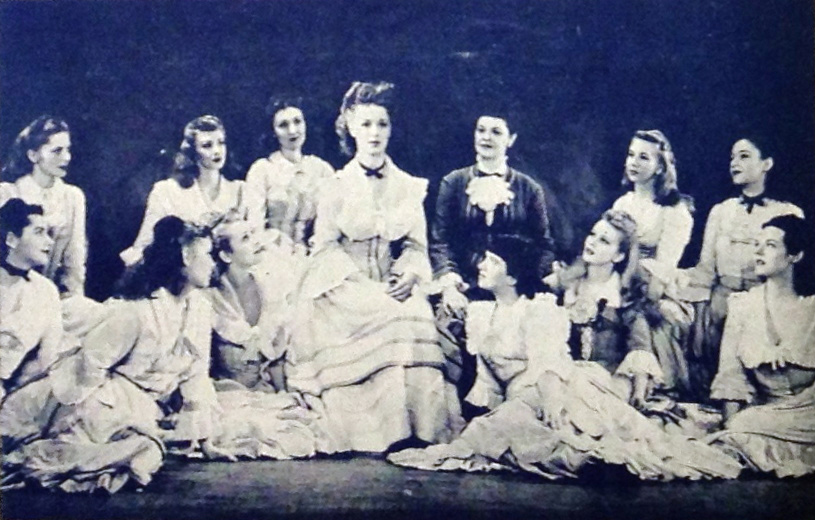
Most people know You’ll Never Walk Alone. They just don’t necessarily know it from a theatre. They know it from a football terrace, or a graduation ceremony, or that moment in a film where someone needs to ugly cry. And if you mention Carousel the musical, there’s a decent chance someone will go “oh, is that the one with the song?”
Yes. It is the one with the song. But it is also so much more than that.
Carousel is a Rodgers and Hammerstein masterpiece. It was voted the best musical of the 20th century by Time Magazine. It features one of the greatest songs ever written for the stage. And it is also one of the most contested, debated, argued-over shows in the musical theatre world. And honestly, that makes it more interesting, not less.
Whether you’re thinking about seeing it, thinking about performing in it, or just trying to figure out what all the fuss is about, this is everything you need to know.
What Is Carousel? The Basics
Carousel is a musical with music by Richard Rodgers and book and lyrics by Oscar Hammerstein II. It opened on Broadway at the Majestic Theatre on 19 April 1945, and it was their second collaboration, following the enormous success of Oklahoma! the previous year.
It was adapted from a 1909 Hungarian play called Liliom by Ferenc Molnár. Rodgers and Hammerstein transplanted the story from Budapest to the rocky coastline of Maine, setting it in 1873. Molnár was initially reluctant to let them adapt it at all. Liliom was a well-known work and he was protective of it. But after seeing what they’d done with Oklahoma!, he agreed. Hammerstein later said that if they hadn’t won that argument, they could never have made Carousel at all.
Richard Rodgers later wrote that Carousel was his personal favourite of everything he ever wrote. That’s quite a statement when you consider the catalogue he was choosing from.
What Is Carousel About? The Plot
Right, so here’s the story. And I’ll warn you now: it is not a light one.
Act One
It’s May 1873 on the New England coastline. There’s a carnival, and at the centre of it is Mrs Mullin’s carousel with its barker, Billy Bigelow. Billy is charming, loud, and absolutely aware of the effect he has on people. Especially women.
Two mill workers, Julie Jordan and her friend Carrie Pipperidge, end up on the carousel. Billy takes a shine to Julie. Mrs Mullin, who is very much not just Billy’s employer, takes exception to this and throws Julie out. When Billy defends her, he gets fired too.
Billy and Julie end up spending the evening together. Neither of them will come right out and say what they’re feeling. But the feelings are very much there.
Carrie, meanwhile, has her own romance going on with the intensely ambitious Enoch Snow, a fisherman with Very Specific Plans for his life.
Billy and Julie get married. It doesn’t go smoothly. Billy is unemployed and proud about it in the way that people who are terrified tend to be. He’s short-tempered. He’s controlling. When Julie tells him she’s pregnant, everything shifts for him. Suddenly he needs money, and he needs it fast.
A man called Jigger Craigin comes along. Jigger is genuinely bad news. He’s got a plan to rob a local mill owner called Mr Bascombe, and he pulls Billy into it. The robbery goes wrong. Cornered by police, Billy takes his own life rather than be arrested.
Act Two
Fifteen years later. Julie is a widow raising a daughter, Louise, alone. Louise is a lonely, difficult teenager who has grown up in her father’s shadow. Not exactly a flattering one.
Billy is given a chance to come back to Earth for one day. He returns, invisible, to watch his family. He tries to leave Louise a gift (a star he’s stolen from heaven), and when she refuses it, he hits her hand. Then he slips into the background of Louise’s graduation, and something happens that sends the show hurtling towards its ending.
I’m not going to spoil the final image here. But I will say: the ending is why people have been arguing about this show for eighty years.
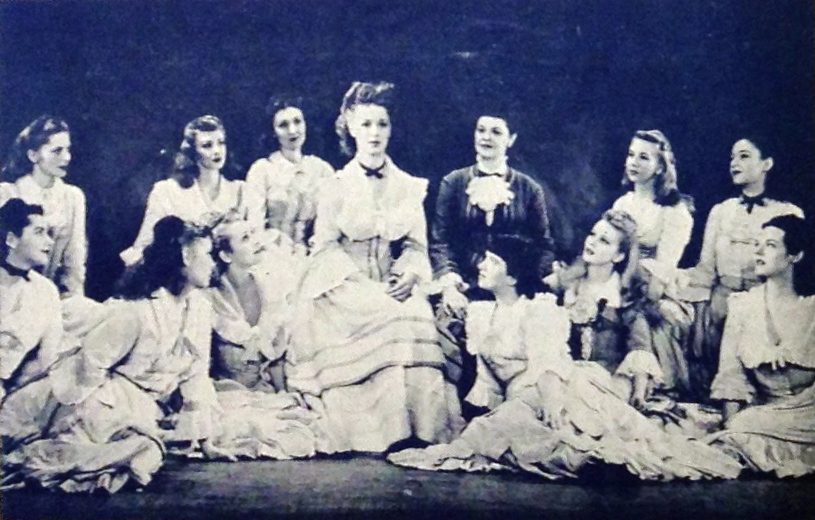
The Songs of Carousel
The score of Carousel is, without question, one of the greatest in the history of musical theatre. Every song earns its place. None of them are filler. Here’s what you need to know.
The Carousel Waltz
There’s no overture. Instead, the show opens with a pantomime scene set to this sweeping, gorgeous piece of orchestral music. Rodgers hated the way audiences talked over overtures, so he decided to force them to pay attention from the very first second. He succeeded.
Mister Snow
Carrie’s number, introducing her relationship with Enoch. It’s sweet and funny and does a huge amount of character work in a short space of time. Don’t underestimate it.
If I Loved You
This is the famous bench scene. Billy and Julie are falling in love, and neither of them can say it directly. So they talk around it. “If I loved you.” Hypothetically, cautiously, completely unable to be straightforward with each other. It’s one of the most beautifully written scenes in musical theatre. The way the blossoms falling from the trees punctuate the lyrics is not an accident. Hammerstein knew exactly what he was doing.
Notably, Billy and Julie never actually sing together in the entire musical. This is deliberate. They are always just slightly out of reach of each other.
June Is Bustin’ Out All Over
The Act One showstopper. Pure joy and energy. The kind of number that makes an audience remember why they love going to the theatre. It’s also the song that famously contains an error about sheep mating seasons that Hammerstein refused to correct, claiming that 1873 was a special year for sheep.
Soliloquy
This is the one.
Soliloquy is a nearly eight-minute-long song in which Billy imagines his future child, first assuming it will be a boy (and planning how he’ll raise him to be exactly like himself, which should be a warning sign), then realising it might be a girl and completely falling apart with tenderness. It is arguably the greatest song ever written for a baritone in musical theatre. It is also the exact moment where the audience understands who Billy is. Not just the bravado, but the love underneath it, and the terror.
If a Billy Bigelow doesn’t break your heart in Soliloquy, the rest of the show won’t land properly. It’s that pivotal.
A Real Nice Clambake
The community number. Everyone’s happy. Everything’s fine. Enjoy it while it lasts, because the show is about to turn a very sharp corner.
What’s the Use of Wond’rin’
This is the controversial one. And I’ll talk about it properly in the section below. For now: it’s Julie’s most important solo, it’s musically beautiful, and it is also the song that gets Carousel into the most trouble with modern audiences.
You’ll Never Walk Alone
Sung by Nettie, Julie’s cousin, in the aftermath of Billy’s death. And then reprised at the end of the show.
Inside the story, it’s a song of practical comfort from a woman who knows that life is hard and grief is real and you still have to keep going. Outside the story, it has somehow become one of the most recognised songs in the world. The lyric doesn’t promise that pain ends. It promises that you won’t face it alone. That’s why it travels so far beyond the theatre.
If your Nettie can’t sing it properly, that is a casting problem you need to fix before rehearsals start.
The Characters of Carousel
Billy Bigelow
The most complicated leading man in the Rodgers and Hammerstein canon. He is not a villain. But he is not a hero either. He’s a man who loves deeply and expresses that love terribly. He hits Julie. The show does not pretend he doesn’t. He is also the man who weeps in Soliloquy at the thought of his daughter. Both of these things are true simultaneously, and that is exactly what makes Carousel so difficult and so powerful.
Casting Billy wrong is the fastest way to sink the show. He has to be charming enough that you understand why Julie loves him, and real enough that you never quite forgive him.
Julie Jordan
Julie is routinely misread as a passive character. She is not. She makes every choice in this show with full awareness of what she’s choosing. She knows what Billy is. She stays anyway. Whether that’s love, trauma bonding, or something the show refuses to simplify is a question Hammerstein deliberately leaves open. Julie is one of the most emotionally complex heroines in Golden Age musical theatre, and she deserves a performer who understands that.
Carrie Pipperidge
The light relief, the best friend, the comic foil. She and Enoch provide the “normal” love story that contrasts with Billy and Julie’s impossible one. Don’t let anyone phone this in. Carrie done well is genuinely funny.
Enoch Snow
Pompous, particular, completely sure of himself, and genuinely affectionate underneath it all. A character baritone role with more going on than it first appears.
Nettie Fowler
The emotional spine of the second act. She doesn’t have a huge amount of stage time, but she carries You’ll Never Walk Alone, and that means she carries the whole final section of the show. Nettie needs a real voice. Not a “she’ll be fine on the night” voice. A real one.
Jigger Craigin
The actual villain. Jigger is cynical, manipulative, and gets away with everything. A gift of a character role, and frequently underused.
Mrs Mullin
Small role, big energy. The jealousy and possessiveness she brings to Billy in Act One tells you everything about the world he’s come from. A good Mrs Mullin makes the show feel fuller.
Louise
Billy’s daughter. She’s the one who carries the weight of Act Two without ever quite knowing why. A teenage girl haunted by a father she never met. Getting Louise right matters enormously for the ending to work.
The Big Question: Can We Still Do Carousel?
Right. Let’s talk about it.
Carousel is a show about a man who hits his wife. He hits his daughter too. And then the show appears to suggest that this is, in some way, okay. Or at least understandable. Because he loved them. The most quoted line in this context is from the final scene, when Louise asks Julie if it’s possible for someone to hit you hard and for it not to hurt. Julie says yes.
What’s the Use of Wond’rin’ is the other lightning rod. The lyric tells Julie and the women around her that there’s no point wondering whether your man is good or bad, because he’s yours and you love him. Amanda Palmer covered it as a character study in battered person syndrome without changing a single word of the text. That tells you something.
So can you still do Carousel? I think yes. But I think you have to do it with your eyes completely open.
The “it’s a product of its time” defence only goes so far. Carousel is set in 1873 and written in 1945, but it’s not so far from our own moment that the attitudes in it feel like history. They don’t. They feel like things people still say. And that means a production of Carousel in 2025 has a responsibility that a production of Carousel in 1965 didn’t have to carry in the same way.
What that looks like in practice is a director who has thought hard about Billy. Not a director who excuses him, and not a director who makes him a pantomime villain, because the show doesn’t support either reading. It’s a director who lets the audience sit with the discomfort. Who doesn’t flinch from the violence. Who trusts the audience to hold two things at once: he was capable of great love, and he caused real harm.
The 2018 Broadway revival leaned into this. It didn’t soften anything. And the result was that Carousel felt more alive and more urgent than it had in decades.
The shows worth doing are almost always the ones that make you think a bit harder. Carousel absolutely qualifies.
Performing in Carousel: What Am Dram Societies Need to Know
If your society is considering Carousel, here’s the honest version of what you’re taking on.
Is Carousel Right for Your Society?
This is a proper, full-scale Golden Age musical. It needs a large cast, a strong ensemble, and real production values. It is not a beginner show. The score is demanding, the subject matter requires a mature approach, and the dream ballet in Act Two needs a choreographer who can actually deliver it.
It is licensed through Concord Theatricals, so availability and fees apply in the usual way.
If your society has done Oklahoma! or South Pacific and done them well, you probably have the foundations. If you’re earlier in your journey, there might be better places to start.
The Vocal Demands
- Billy Bigelow is the most demanding baritone role in the standard am dram repertoire. Soliloquy alone (nearly eight minutes of continuous singing across a wide range with enormous dramatic weight) is something most performers will never attempt. Your Billy needs stamina, range, and the acting ability to make it land. Finding someone who can do all three is not easy. But when you do, it will be the performance your audiences talk about for years.
- Julie Jordan is a lyric soprano with enormous emotional demands. She’s onstage for long stretches where she barely sings. She just has to be. That requires an actor, not just a voice.
- Nettie Fowler cannot be an afterthought. The show ends on her voice carrying You’ll Never Walk Alone. Cast accordingly.
- Carrie Pipperidge is a lighter soprano with strong comic instincts. She needs to be funny and warm and genuinely charming alongside the main couple.
- The ensemble carries a lot. This is not a show where the chorus can coast. The opening, June Is Bustin’ Out All Over, A Real Nice Clambake: these are full company numbers that require energy, commitment, and good ensemble singing throughout.
The Director’s Challenge
The key question for any director of Carousel is: how do you make the audience care about a man who hits his wife?
The answer is not to downplay the hitting. The answer is to make Billy fully human: let Soliloquy do its job, let the charm be real, and then don’t protect the audience from the consequences of who he is.
The dream ballet is the other major challenge. In the right hands, it’s one of the most theatrical sequences in the Golden Age repertoire. In the wrong hands, it’s a long, strange interlude that loses an audience. Your choreographer needs to understand it dramatically, not just technically.
The ending needs to earn its resolution. If it doesn’t, the whole show feels like it’s excusing Billy rather than examining him. The difference between those two things is entirely in the staging and the performances.
What It’s Like to Perform It
I haven’t been in Carousel myself. Yet. But I’ve performed in enough Golden Age musicals to know what a score like this asks of you.
This is material that requires you to mean every word. You can get away with a bit of surface-level performance in a lighter show. You cannot get away with it here. The music is too honest. The characters are too exposed. If you’re not fully committed, the audience will feel it.
The flip side of that is that when a company gets it right, there is nothing quite like it. Performing music of this quality, in a show with this much to say, is one of the great privileges of amateur theatre. It demands more than most shows. It gives back more too.
Notable Productions of Carousel
- 1945 original Broadway production at the Majestic Theatre. Ran for 890 performances. Received immediate critical acclaim and established Carousel as a landmark of the American musical theatre canon.
- 1956 film starring Gordon MacRae and Shirley Jones, directed by Henry King. Faithfully follows the stage musical with a few changes. Notably, in the film Billy dies accidentally rather than by suicide. Shot partly on location in Maine and is genuinely beautiful to look at.
- 1994 Broadway revival at the Vivian Beaumont Theater, which won the Tony for Best Revival of a Musical. Widely regarded as the production that established Carousel’s serious reputation after years of it being somewhat overlooked.
- 2018 Broadway revival at the Imperial Theatre, featuring Renée Fleming as Nettie Fowler. This is the production most often cited in contemporary discussions of the show. It didn’t flinch. It made Carousel feel essential again. Audra McDonald has also won a Tony in Carousel, which gives you some sense of the calibre of talent this show attracts.
- UK regional and amateur productions continue to be staged regularly. Early 2026 UK listings include dates in Norwich and Yeadon, and the show remains a staple of the amateur calendar.
Should You Go and See Carousel?
Yes. Absolutely. But go prepared.
This is not an evening of light entertainment. It is a musical that will make you feel a range of things, and not all of them comfortable. You will cry at You’ll Never Walk Alone, almost certainly. You will probably find Billy charming before you find him troubling. The bench scene will get you. Soliloquy will get you even more.
And then you’ll sit with the ending and you’ll have opinions. That’s exactly what the show is designed to do.
Go with someone you can talk to about it on the way home. That conversation is part of the experience.
Frequently Asked Questions About Carousel
What is Carousel the musical about?
Carousel is the story of Billy Bigelow, a carousel barker, and Julie Jordan, a mill worker, who fall in love and marry in a New England fishing village in 1873. Their relationship is turbulent and often painful. After Billy’s death during a robbery gone wrong, he is given one day to return to Earth to try to make things right with his daughter. The show explores love, redemption, fate, and whether people are capable of change.
Who wrote Carousel?
Carousel was written by Richard Rodgers (music) and Oscar Hammerstein II (book and lyrics). It was their second collaboration and opened on Broadway in 1945. It was adapted from the Hungarian play Liliom by Ferenc Molnár.
What are the most famous songs in Carousel?
The most famous songs include You’ll Never Walk Alone, If I Loved You, June Is Bustin’ Out All Over, Soliloquy, and Mister Snow. You’ll Never Walk Alone is arguably the most widely recognised, having transcended the show to become a standard performed in contexts far beyond the theatre.
Is Carousel based on a true story?
No. It is adapted from Ferenc Molnár’s 1909 play Liliom, which is a work of fiction. Rodgers and Hammerstein relocated the story from Budapest to Maine and made significant changes to the plot.
Why is Carousel controversial?
Carousel deals directly with domestic violence. Billy hits Julie during their marriage. The show also features the song What’s the Use of Wond’rin’, which appears to encourage women to stay with a man regardless of how he treats them. The final scene, in which Julie implies that a hit from someone who loves you doesn’t hurt, is particularly contested. Critics argue the show romanticises or excuses abusive behaviour. Others argue it depicts these attitudes honestly as a way of examining them. The debate is genuine and ongoing.
Is Carousel suitable for children?
Carousel deals with domestic violence, robbery, suicide, and complex emotional themes. It is generally not recommended for young children. Older teenagers who enjoy musical theatre may engage with it meaningfully, but parental judgement applies.
How long is Carousel?
Carousel runs for approximately two hours and thirty minutes including an interval.
Where is Carousel set?
Carousel is set in a small fishing village on the coast of Maine, New England, in 1873.
What voice type is needed for Billy Bigelow?
Billy Bigelow is a baritone role. It is one of the most demanding baritone roles in the standard musical theatre repertoire, requiring significant range, stamina, and dramatic depth. Soliloquy in particular is a serious vocal undertaking.
Is Carousel available to license for amateur theatre?
Yes. Carousel is available to license for amateur and professional productions through Concord Theatricals.
A Final Word
Carousel is the kind of show that stays with you. Not just because of You’ll Never Walk Alone, although that helps. It stays with you because it refuses to make things simple. Billy is terrible and he is tender. Julie is a victim and she is also making a choice. The ending is redemptive and it is also deeply uncomfortable. All of that is intentional.
There is a reason Richard Rodgers called it his favourite. There is a reason Time Magazine called it the best musical of the 20th century. And there is a reason people are still arguing about it eighty years later.
The shows worth loving are the ones that keep you thinking. Carousel absolutely qualifies.