
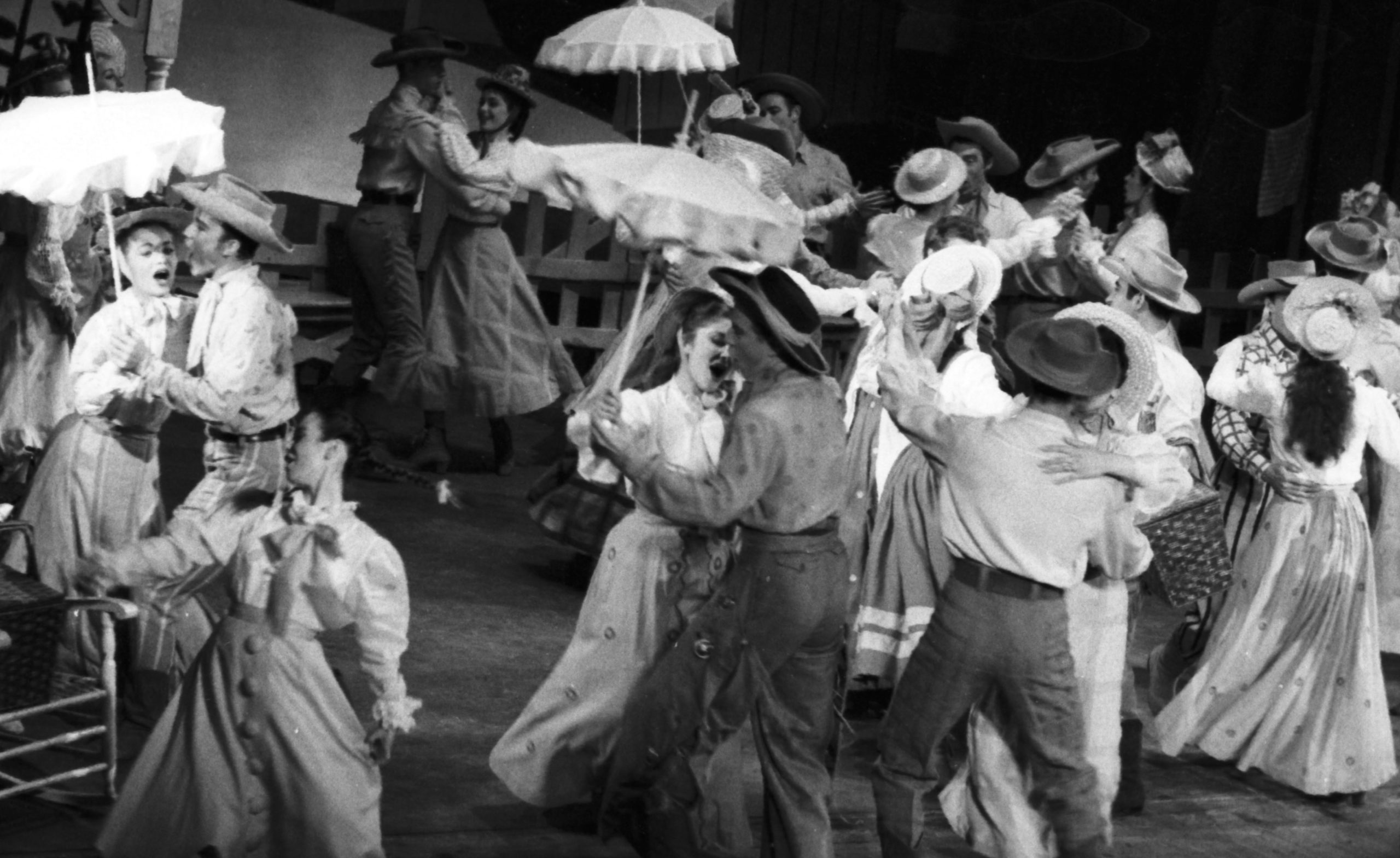
If there is one musical that every theatre person, amateur or professional, should know inside out, it’s Oklahoma!. It’s not just a beloved show. It’s the show that changed everything. The one that basically invented the modern musical as we know it. And yet, for all its influence, it’s surprisingly misunderstood. People think it’s a sweet, sunny story about cowboys and corn. And it is, a bit. But there’s a lot more going on under those big open skies.
So grab your Chardonnay and let’s get into it. This is the full, no-holds-barred guide to Oklahoma! the musical: the story, the songs, the controversy, the vocal demands, and everything in between.
What is Oklahoma! the Musical?
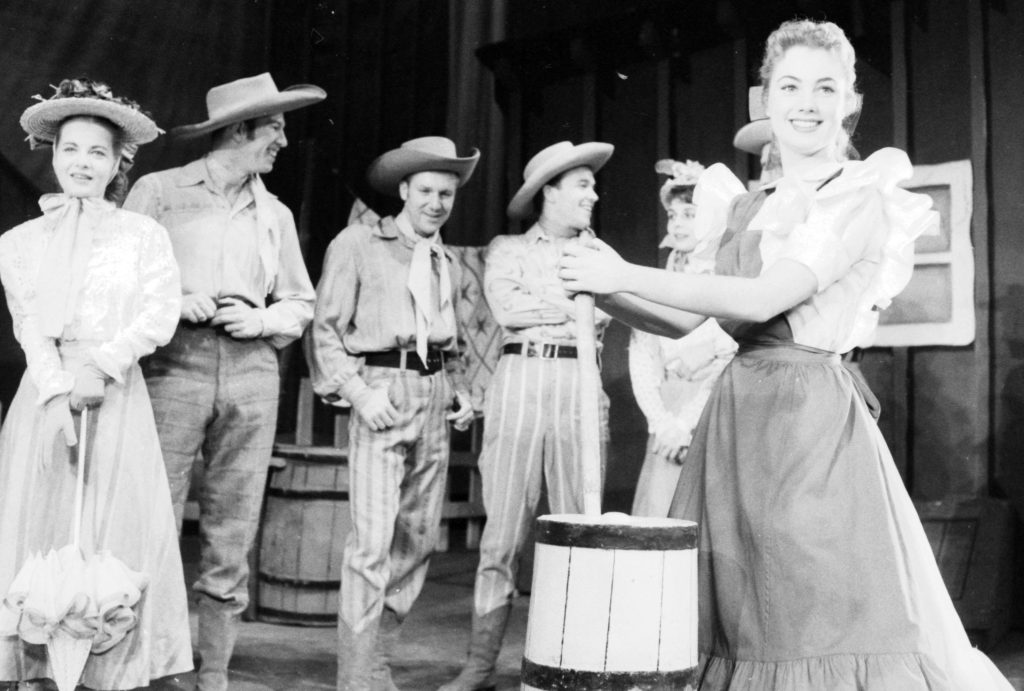
Oklahoma! is a musical with music by Richard Rodgers and book and lyrics by Oscar Hammerstein II. It opened on Broadway on 31 March 1943 and ran for an extraordinary 2,212 performances. At the time, that was the longest run in Broadway history.
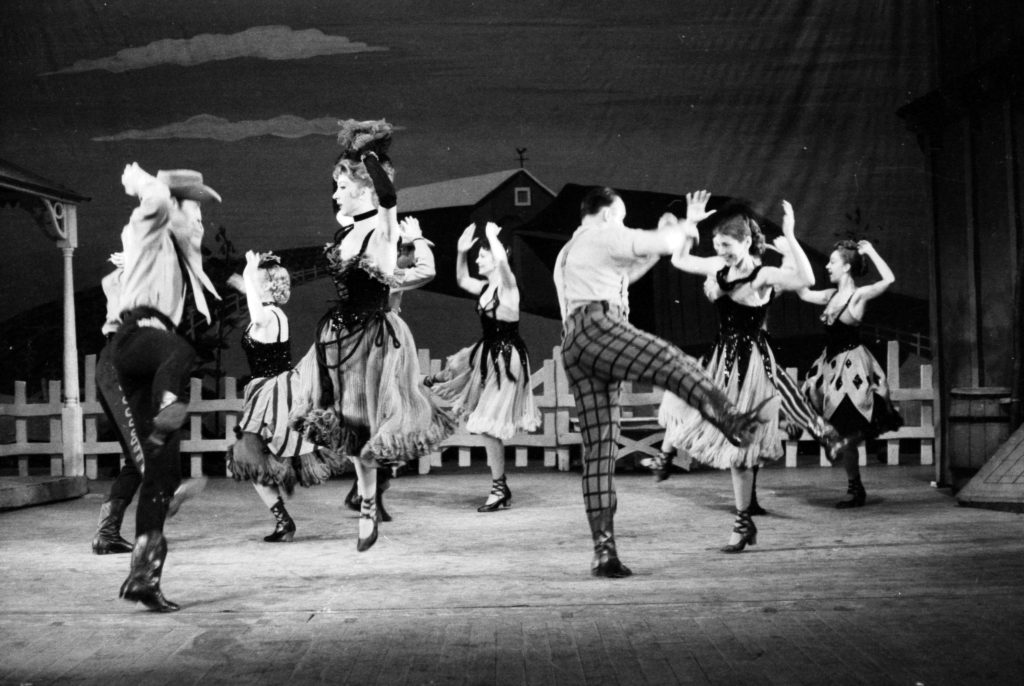
Before Oklahoma!, musicals were largely variety shows. Songs and dances that were fun, but not necessarily connected to character or story. Oklahoma! changed all of that. It integrated the music, the drama, and the choreography into a single, coherent whole. Every song moved the story forward. Every dance told us something about the characters. Agnes de Mille’s choreography was genuinely revolutionary. And the dream ballet, of which more later, was unlike anything audiences had seen before.
It was the first collaboration between Rodgers and Hammerstein, and it launched one of the most important partnerships in musical theatre history. South Pacific, Carousel, The Sound of Music, The King and I. None of those happen without Oklahoma! first.
What is Oklahoma! About? The Plot Explained
The story is set in Indian Territory, Oklahoma, in 1906, just before it becomes a US state. At its heart it’s a love story, but one with a genuinely dark undercurrent that people often underestimate.
Curly McLain is a cowboy who is very much in love with farm girl Laurey Williams. Laurey likes him back but is too proud to admit it. Instead, to make Curly jealous, she agrees to go to the box social with Jud Fry, the brooding, isolated farmhand who works for her Aunt Eller. And here’s where it gets interesting: Jud is not just a bit moody. He is genuinely unsettling. He has a collection of provocative postcards in his smoke-filled hut, he makes Laurey deeply uncomfortable, and there is a very real sense of threat around him throughout the show.
The secondary love story involves Will Parker, who has won fifty dollars in a rodeo in Kansas City and wants to use it to claim Ado Annie Carnes as his girl. Ado Annie, memorably, can’t say no to any man, which makes things complicated when the Persian peddler Ali Hakim arrives on the scene.
At the box social, Jud bids an alarming amount of money to win Laurey’s hamper. Curly sells his horse and gun to outbid him. Jud is humiliated and enraged. Later, Laurey fires Jud, and he threatens her. In the dream ballet, her subconscious plays out her fear of Jud in vivid, terrifying detail.
Curly and Laurey marry. At the wedding celebration, Jud attacks Curly and falls on his own knife. He dies. A swift frontier court clears Curly, and the newlyweds head off into the future as Oklahoma prepares for statehood.
It sounds simple. But in the hands of a good director, this show can be genuinely unsettling. The community’s easy dismissal of Jud’s death, the way desire and violence run just beneath the surface of this cheerful farming community, there’s a lot to unpick if you want to.
The Songs in Oklahoma! (And Why They’re All Bangers)
Let’s be honest: the score for Oklahoma! is just exceptional. There isn’t a weak number in it. Here’s a run through the standouts.
- Oh, What a Beautiful Mornin’ opens the show with Curly alone on stage, singing about the beauty of the Oklahoma landscape. No chorus line. No flashy entrance. Just a man, a song, and a lyric about corn growing as high as an elephant’s eye. It was revolutionary in 1943. It remains one of the most recognisable openings in musical theatre.
- The Surrey with the Fringe on Top is a pure joy of a song. Curly paints a vivid, romantic picture of the surrey he’s going to take Laurey to the dance in, and Laurey gradually falls for it before catching herself. The interplay between the two of them and Aunt Eller is a masterclass in comic musical writing.
- Kansas City gives Will Parker the chance to tell everyone about his adventures in the big city. It’s fun, it’s energetic, and it needs a strong male ensemble who can sell the dancing. Great opening number for Act Two energy.
- I Cain’t Say No is Ado Annie’s showpiece and one of the funniest songs in the American musical canon. It is also genuinely hard to perform well. The comedy has to be real, not indicated. And it needs a voice that can handle the belt with ease and still sell the jokes. When it lands, the audience is in the palm of your hand.
- Many a New Day is Laurey’s response to Curly pretending he doesn’t care about her. She performs it for the girls, insisting she won’t waste a tear on any man. Vocally it sits in lyric soprano territory and asks for a lightness of touch.
- People Will Say We’re in Love is the big romantic duet and one of those songs that feels timeless in the best possible way. The conceit, two people telling each other all the things they must not do because it might look like they’re in love, is charming and smart. It’s also a genuinely beautiful sing.
- Pore Jud is Daid is one of the most darkly comic numbers in musical theatre. Curly visits Jud in his smokehouse, apparently to comfort him, and paints a vivid picture of how people would react if Jud were dead. All while Jud stands next to him. It’s brilliant writing and an incredibly difficult tonal balance to pull off. Too much comedy and you lose the menace. Too much menace and you lose the comedy.
- Out of My Dreams leads into the dream ballet and is a gorgeous lyric soprano piece. It sets up the dream sequence beautifully.
- Oklahoma! itself is the title number and the big finale. It is pure, joyful, rousing musical theatre. By the time the whole company is belting it out, you should have goosebumps. If you don’t, something has gone wrong.
The Dream Ballet: Oklahoma!’s Most Talked-About Moment
Right, let’s talk about the dream ballet.
In Act One, Laurey takes a powder from Aunt Eller’s travelling medicine man to help her make up her mind between Curly and Jud. She falls into a dream. And what follows is a fifteen-minute, largely wordless dance sequence choreographed by Agnes de Mille, in which dream versions of the characters act out Laurey’s deepest fears: that Jud will win her, that Curly will be killed, that darkness will swallow the light.
In 1943, this was extraordinary. Nothing like it had been done before. De Mille used ballet-trained dancers to portray the subconscious in a way that the plot couldn’t. It added psychological depth to what might otherwise have been a straightforward love story.
In practice, for amateur societies, the dream ballet is one of the biggest creative decisions you face. Do you stage it fully? Condense it? Cut it? It requires a separate dream cast (or the leads themselves, if they can dance at that level) and strong choreography to work. I’ve seen it done beautifully and I’ve seen it go very, very wrong.
My honest take: if you have the dancers, do it. It’s one of the most powerful sequences in the show and the audience feels it even if they can’t quite articulate why. If you don’t, don’t force it. A well-staged condensed version is better than a badly executed full one.
Oklahoma! and the Dark Side of the Story
Let’s spend a moment on Jud Fry, because he deserves it.
Jud is one of musical theatre’s most complex antagonists. He’s not a cartoon villain. He’s an isolated, lonely man who has almost certainly been treated as an outsider his entire life. The community dismisses him, mocks him, and fears him. Curly actively fantasises about his death, out loud, in his presence. Laurey is frightened of him but also arguably leads him on by agreeing to go to the social with him.
When Jud dies at the end, the community barely pauses. The wedding continues. Oklahoma becomes a state. And there’s something genuinely uncomfortable about that if you let yourself sit with it. Some modern productions have leaned very hard into this, none more so than the Daniel Fish revival which we’ll come to in a moment.
There is also the question of what Laurey actually wants, or is permitted to want, in this world. The show is set in 1906. Her choices are constrained by community expectation and the men around her in ways that a modern audience notices. Good productions don’t paper over this. They let it breathe.
The Vocal Demands of Oklahoma! (A Performer’s Perspective)
As someone who has performed in musicals for years, this is the bit I find most interesting to think about.
Oklahoma! is a show that sits in a relatively traditional vocal idiom. This is not a contemporary belt score. It asks for voices that can handle lyric, legit-adjacent singing with warmth and clarity.
- Curly is written for a lyric tenor. He needs a genuinely beautiful tone, the ability to float the top of his range with ease, and enough presence to carry the romantic weight of the show. This is not a role for a big, pushed tenor voice. It’s a role for someone with genuine lyricism.
- Laurey needs a lyric soprano. Light, clean, and expressive. She needs to be believable as a young woman wrestling with her feelings. The role does not require a massive voice, but it needs control and real emotional nuance.
- Ado Annie is the one who needs a belt. She also needs comic timing, because without it the role falls completely flat. This is a great role for someone who can do both and is completely unafraid to look ridiculous.
- Jud needs a baritone with real depth and presence. His songs, including the genuinely unsettling Lonely Room, ask for an actor-singer who can communicate threat and pathos at the same time.
For amateur societies, the casting challenges are real. Finding a strong lyric tenor is always harder than finding a baritone. Laurey’s soprano needs to be reliable across a run. And Ado Annie needs that combination of belt and comedy that doesn’t always come in the same package.
Oklahoma! in Amateur Theatre: What to Expect
Oklahoma! is a popular choice for am dram societies for good reason. The score is magnificent, the characters are meaty, and audiences love it. But it is not a simple show to mount.
The ensemble numbers are crucial. This is not a show where the chorus can coast. Oklahoma! the title number, The Farmer and the Cowman, Kansas City, all of these require an energised, committed ensemble who can sing, move, and stay present.
The dance demands are significant. Even without the full dream ballet, the show needs a choreographer who understands period movement and can create something that feels authentic without being stiff. The girls’ numbers in particular need genuine lightness and style.
Casting the right Jud is arguably more important than any other decision. A Jud who can’t communicate genuine menace means the whole second act loses its tension.
And the accents. You need to decide early on how you’re going to handle the Oklahoma accents and commit to it as a company. Either everyone finds a consistent version, or you acknowledge the setting through other means. Half-hearted, inconsistent attempts at a Southern accent are worse than none at all.
Famous Productions of Oklahoma! (And What Made Them Special)
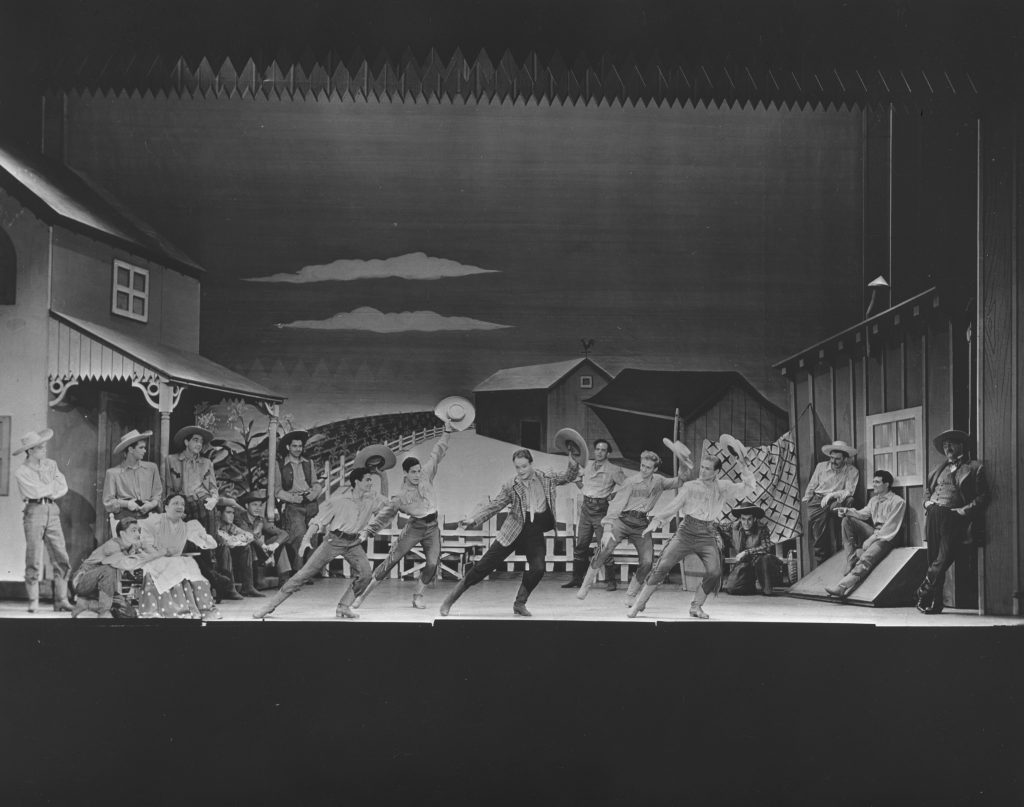
The original 1943 Broadway production directed by Rouben Mamoulian and choreographed by Agnes de Mille is the one that changed everything. Cast recording worth every listen.
The 1955 film with Gordon MacRae and Shirley Jones is gorgeous to look at and has some wonderful performances. The wide-open Technicolor Oklahoma landscape is beautiful. It’s also very much of its era and doesn’t interrogate any of the darker material.
The 2019 Daniel Fish revival is the one that divided everyone and that I find absolutely fascinating. Staged in the round, stripped back, the cast in modern clothes, it leaned all the way into the darkness of the show. Jud was sympathetic. The community was chilling. Lonely Room became genuinely harrowing. People either loved it or thought it was a travesty. I think it was brave and brilliant. It proved that this show has real depth if you’re willing to go looking for it. It transferred to the West End and continues to provoke strong opinions.
If you’re directing Oklahoma! for an amateur society, these two approaches basically represent your two poles: the sunny, traditional production or the darker, more interrogative one. Both are valid. Know which one you’re making before you start.
Oklahoma! Trivia: The Things You Might Not Know
- The show was originally called Away We Go! and opened out of town to mixed reviews. Luckily, someone had the sense to change the title.
- It was the first Rodgers and Hammerstein collaboration. Before Oklahoma!, Rodgers had worked with Lorenz Hart for over twenty years. The switch to Hammerstein was a significant creative risk that paid off in ways nobody could have predicted.
- Agnes de Mille had no Broadway choreography credits before this show. She was brought in on something of a gamble and delivered work that changed the art form.
- The original cast album was the first original cast recording of a Broadway musical to be released commercially. It sold over a million copies at a time when that was almost unheard of.
- Oklahoma! holds the record as the longest-running show in Broadway history at the time of its closing in 1948. That record stood for years.
Should You Go and See Oklahoma!
Yes. Unequivocally, yes.
But go in with your eyes open. If you’re expecting a gentle, unchallenging night of golden-age nostalgia, you might be surprised by how much this show has to say if it’s in good hands. If you’re expecting the dark, deconstructed Daniel Fish version and you get the traditional sunny one, that’s also a perfectly wonderful thing.
Oklahoma! is for musical theatre lovers who want to understand where the art form came from. It’s for audiences who appreciate great songs performed with real craft. It’s for anyone who has ever watched a love story and thought “yes, but what’s really going on here?”
It’s also just a genuinely brilliant evening out. The songs are wonderful. The story moves. And by the time the whole company hits that final Oklahoma, you’ll be grinning like an idiot.The Ultimate Guide to Rodgers and Hammerstein