
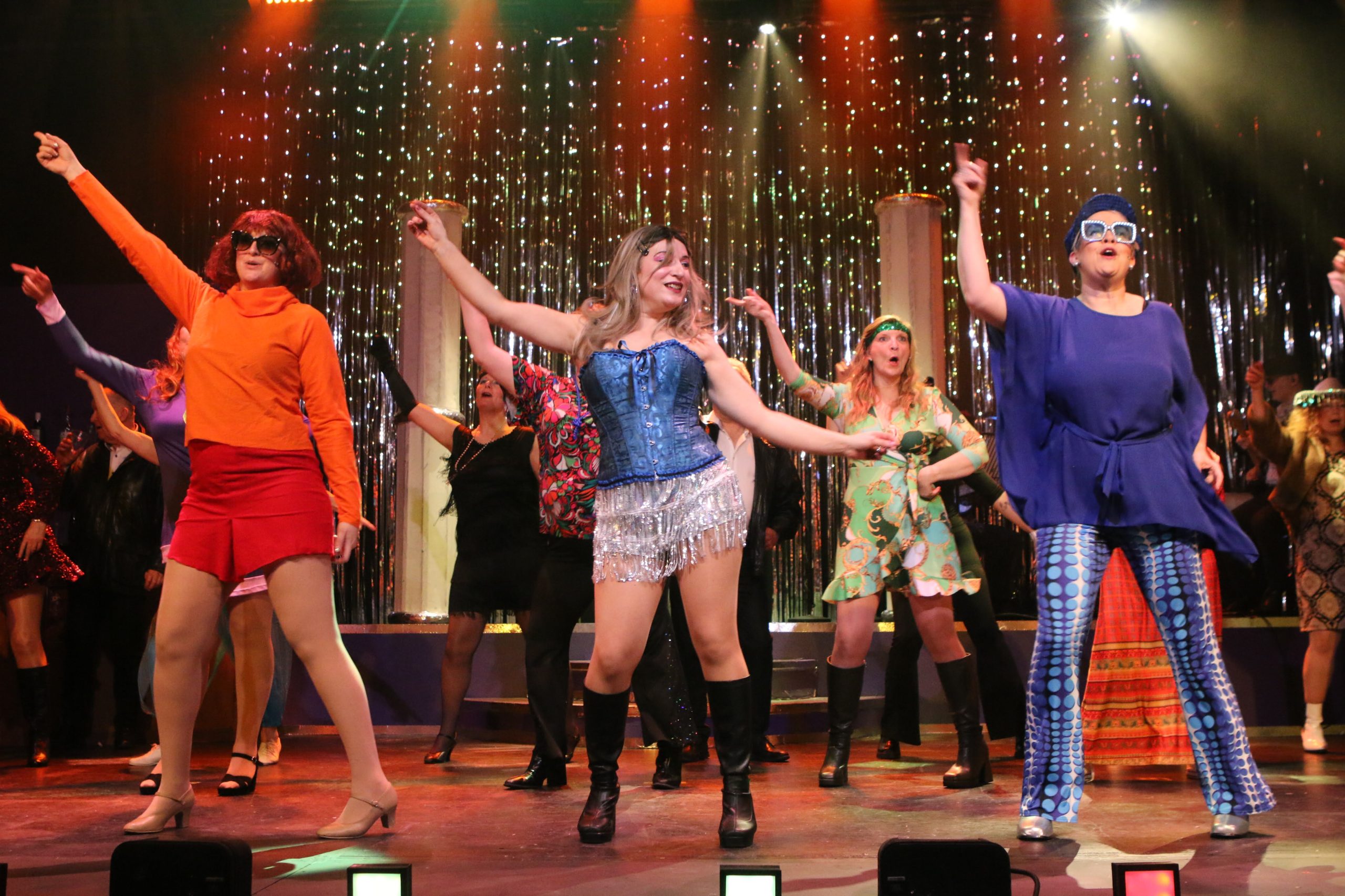
If you’ve ever sat in a theatre and recognised every single song before the interval, you were probably watching a jukebox musical. It’s one of the most divisive formats in musical theatre, beloved by audiences, often side-eyed by critics, and absolutely everywhere in both the West End and amateur theatre right now. I want to properly unpack what the term actually means, where it came from, and why it matters so much to the am dram world I write about.
What Is a Jukebox Musical?
The Core Definition
A jukebox musical is a stage musical built primarily around pre-existing, previously released songs rather than a new score written specifically for the show. Instead of a composer creating original music to match the story beat by beat, the creative team takes an existing catalogue of recordings, usually by one artist, one band, or one era, and builds a script and staging around them.
This is the single biggest structural difference between a jukebox musical and a book musical. In a true book musical, the book, the music, and the lyrics are written together as one integrated system. In a jukebox musical, the songs already existed in the world, often for decades, before anyone wrote a line of dialogue to go around them.
Where the Phrase Comes From
The term itself dates back further than most people assume. “Jukebox” entered the language in 1939, and “jukebox musical” in something close to its current usage was already in circulation by 1962, describing films built largely out of hit recordings rather than original scores. Some theatre historians trace the actual concept back much further still, to John Gay’s The Beggar’s Opera in 1728, which took popular tunes of the day and set new, satirical lyrics to them. So in a strange way, the jukebox musical might be one of the oldest tricks in musical theatre, not one of the newest.
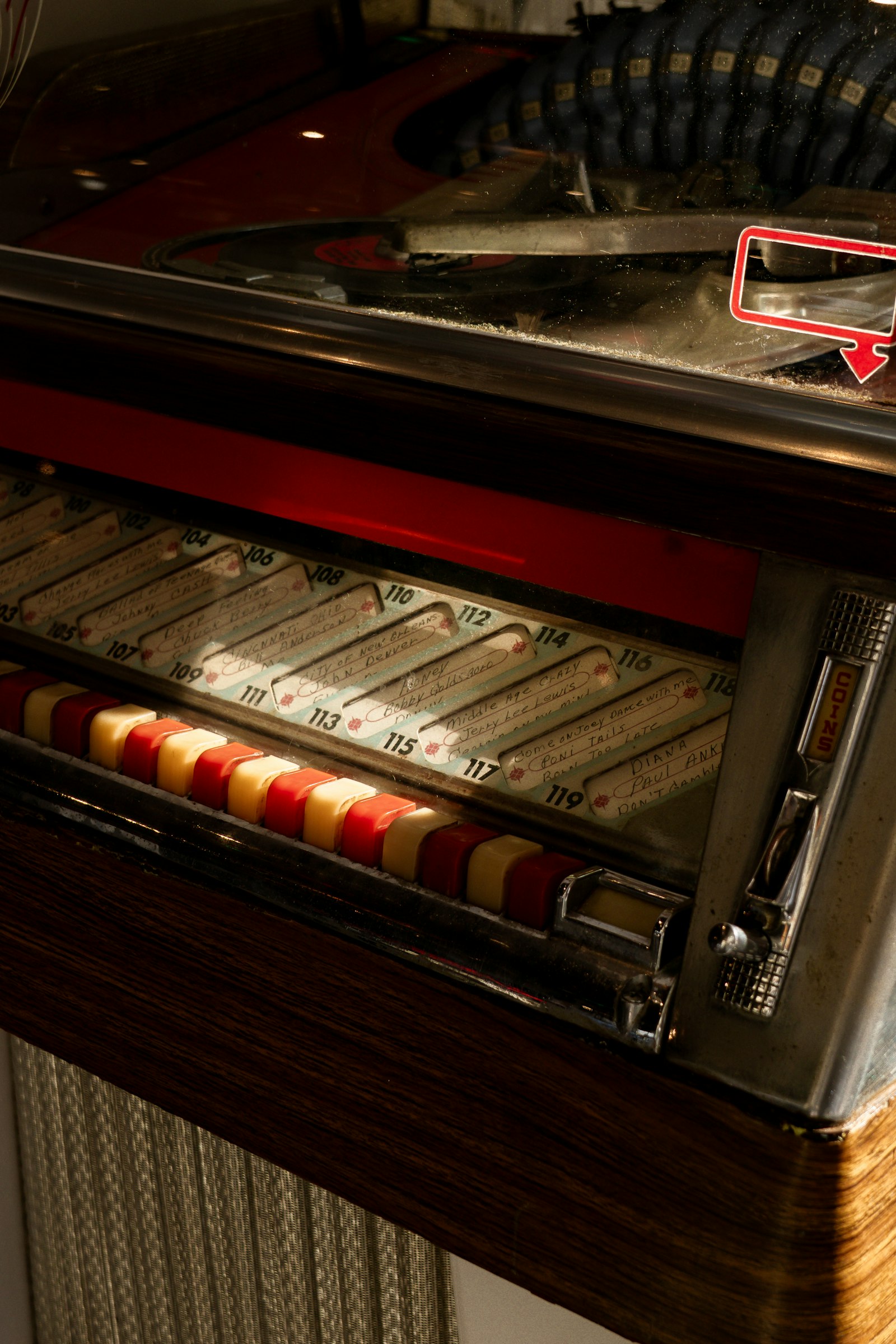
The Three Types of Jukebox Musical
Not every jukebox musical works the same way. I think it helps to split the format into three distinct types, because the type tells you a lot about what kind of evening you’re actually going to have.
Biographical Jukebox Musicals
This is the type built around the real life story of the artist or band whose songs are being used. Jersey Boys is the textbook example: the show tells the actual rise of Frankie Valli and the Four Seasons, and the songs are deployed in roughly the order and context they were written, so the music doubles as a kind of soundtrack to real events. Tina: The Tina Turner Musical and MJ the Musical work the same way. The appeal here is biographical curiosity as much as the music itself; you’re watching a life story that happens to come with a hit-filled soundtrack already attached.
Fictional (Catalogue) Jukebox Musicals
This type uses an artist’s catalogue to tell a completely invented story that has nothing to do with the real lives of the people who wrote or performed the songs. Mamma Mia! is the defining example: it tells an original story about a mother, a daughter, and a Greek island wedding, built entirely around ABBA’s back catalogue, with zero connection to ABBA’s actual biography. We Will Rock You does the same thing with Queen’s catalogue, building a science-fiction plot that has nothing to do with the band’s history. This type asks the most of its writers, because they have to bend an entire pre-existing songbook into service of a story it was never written for.
Revue-Style Jukebox Musicals
The third type doesn’t really attempt a plot at all. It’s a themed showcase, a tribute concert with theatrical staging, often built around a decade, a genre, or a single songwriter’s body of work, without much pretence of dramatic narrative connecting one number to the next. Many smaller-scale or am dram-friendly jukebox shows fall into this category, and I think it’s the most honest version of the format: it doesn’t pretend to be doing something it isn’t.
A Brief History of the Jukebox Musical
The modern jukebox musical as we’d recognise it really starts in 1995, when Smokey Joe’s Cafe opened on Broadway. Built around the songbook of Jerry Leiber and Mike Stoller, it’s widely credited as one of the first shows to actually be labelled a jukebox musical in the way we use the term today.
But the format didn’t become a commercial juggernaut until Mamma Mia! opened in London in 1999, before transferring to Broadway in 2001. Mamma Mia! proved something the industry hadn’t fully believed until then: that a show built entirely around a beloved back catalogue could become one of the most successful musicals of all time, not a novelty curiosity.
Jersey Boys followed in 2005, winning the Tony on Broadway and the Olivier in the West End for Best New Musical, and it proved the biographical jukebox musical could win serious industry respect, not just box office. After that, the format exploded: All Shook Up and The Boy from Oz brought biographical jukebox musicals into the mainstream in the early 2000s, and more recently the West End has seen a steady stream of new entries including Tina, Ain’t Too Proud, The Choir of Man, Moulin Rouge! The Musical, and & Juliet.
Jukebox Musical vs Book Musical vs Concept Musical
I think the clearest way to understand what makes a jukebox musical distinct is to put it side by side with the other major structural formats. Here’s how they compare.
| Structural Element | Jukebox Musical | Book Musical | Concept Musical |
|---|---|---|---|
| Source of the music | Pre-existing, previously released songs | Original score written specifically for the show | Original score written specifically for the show |
| Primary creative challenge | Bending existing songs to fit a new or biographical story | Integrating book, music and lyrics as a single system | Building structure and theme rather than chronological plot |
| Narrative framework | Varies (biographical, fictional, or none at all) | Linear, chronological, cause-and-effect | Often non-linear, episodic, or thematic |
| Audience relationship to the music | Familiar before the curtain rises | Discovered for the first time during the show | Discovered for the first time during the show |
| Commercial logic | Built-in audience who already loves the songs | Original songs must earn their place through the story | Original songs must earn their place through theme/structure |
If you want the full breakdown of how a book musical actually works structurally, I’ve written a separate deep dive on that. The concept musical gets its own full pillar piece soon too.
Is the Jukebox Musical Less Artistically Respected?
I’ll be honest about this, because I think pretending otherwise does a disservice to anyone trying to understand the genre properly. Jukebox musicals carry a reputation problem in some theatre circles. The most common criticism is that they’re a financial shortcut: rather than paying a composer to write 90 minutes of new material, producers license a catalogue that’s already proven itself commercially, and build a show around guaranteed nostalgia rather than artistic risk. Critics have also argued the format diverts investment away from composers and lyricists writing genuinely new work, concentrating money instead on artists who’ve already made fortunes from the same songs decades earlier.
I don’t think that criticism is entirely wrong, but I also don’t think it’s the whole story. The best jukebox musicals, and I’d put Jersey Boys and Six (which, important caveat, is not actually a jukebox musical despite the pop-concert energy, since its songs are entirely original) in this category, prove the format can do real dramatic work when the writing team treats the song selection and sequencing as seriously as any original score. A weak jukebox musical feels like a greatest-hits playlist with a thin plot stapled on. A strong one makes you forget you already knew every song, because the staging and story have given each one new dramatic weight.
Why Jukebox Musicals Work, Even When Critics Don’t Rate Them
The Psychology of Recognition
There’s a real psychological reason jukebox musicals land so consistently with audiences, and I think it’s worth taking seriously rather than dismissing it as cheap nostalgia. Recognising a song you already love triggers a different kind of emotional response than discovering a new one. The brain doesn’t have to do any work decoding an unfamiliar melody or guessing where a lyric is going; it can relax into the recognition and let the staging and story layer new meaning on top of something it already trusts. That’s a genuinely different theatrical experience to a book musical, where part of the pleasure is the surprise of a new score landing for the first time. Neither is better, but they’re doing different jobs.
The Singalong Effect
Most successful jukebox musicals lean into this rather than fighting it. Mamma Mia! famously closes with a literal encore singalong, and Jersey Boys, Tina and Ain’t Too Proud all build toward curtain calls that function almost like mini concerts. I think this is actually an honest acknowledgement of what the audience came for: they didn’t just want to watch a story, they wanted permission to feel the way they feel when that song comes on in the car. A book musical would never end this way, because it would undercut the fiction. A jukebox musical can, because the music was always partly the point.
Why Some Critics Stay Unconvinced
The flip side of all this is that critics who value originality above audience pleasure will always be a harder sell on the format, and I don’t think that’s an unreasonable position even if I don’t fully share it. A jukebox musical’s biggest strength, the audience’s pre-existing relationship with the songs, is also exactly what makes it structurally easier to write than an original score that has to earn an audience’s trust from scratch. Both things can be true at once: the format can be commercially brilliant and creatively lower-risk in the same show.
Case Studies: How the Format Actually Works on Stage
Mamma Mia!
This remains the gold standard for the fictional/catalogue type. What makes it work is restraint: the writers didn’t try to use every ABBA song that existed, they picked the songs that could plausibly carry an emotional beat in an original story about a mother, a daughter, and three possible fathers, then trusted the audience’s existing love for the music to do the rest of the emotional heavy lifting.
Jersey Boys
This is the best argument for the biographical type done well. Because the songs were written and performed by the actual subjects of the show, in something close to chronological order, the music never feels bolted on. You’re watching the songs get written and performed in something close to the order they actually happened, which gives the show a documentary honesty that fictional jukebox musicals can’t replicate.
& Juliet
A more recent, cleverer example: it takes Max Martin’s pop songbook (written for artists like Britney Spears, Backstreet Boys, and Katy Perry, not for any single artist’s life story) and builds a completely invented “what happens after Romeo and Juliet” plot around it. It’s a useful example of how flexible the fictional jukebox format has become, borrowing from a songwriter’s catalogue across many different performers rather than one band or artist.
Beautiful: The Carole King Musical
I think this one sits in an interesting middle ground between Mamma Mia! and Jersey Boys. It’s biographical, following Carole King’s actual career from teenage songwriter to solo superstar, but a large part of its catalogue consists of songs she wrote for other artists before she ever performed them herself. That makes it a useful reminder that the biographical and fictional types aren’t always as cleanly separated in practice as a tidy definition might suggest; a lot of the best jukebox musicals borrow techniques from both categories depending on what a particular scene needs.
Jukebox Musicals in UK Amateur Theatre
This is where the format genuinely matters for the world I write about. Jukebox musicals are enormously popular with UK am dram societies, and I think there are practical reasons for that beyond simple audience appeal.
Vocal demands are often more accessible. Pop and rock catalogue songs were written for contemporary singers, not trained musical theatre voices, which can make them more approachable for amateur casts than a demanding classic score.
Audiences arrive pre-sold. A society programming Mamma Mia! or Jersey Boys isn’t trying to convince anyone the music is good, the audience already knows and loves it before they buy a ticket, which makes marketing and ticket sales considerably easier than for a less familiar title.
Ensemble and choreography opportunities are strong. Many jukebox musicals lean heavily on big ensemble dance numbers built around well-known songs, which gives larger societies plenty of opportunity to use their full membership.
Licensing varies show by show, and this is worth checking carefully rather than assuming. Some jukebox musicals are licensed through the major agencies like Concord Theatricals or Music Theatre International, while others (Mamma Mia! is a notable example) are licensed directly through the production’s own rights holder rather than a standard agency. Always check the specific show’s official licensing page before you commit to programming it.
Jukebox Musicals UK Societies Reach For Most
In my experience following the am dram scene, a handful of titles come up again and again when societies are choosing a jukebox musical: Mamma Mia! and Jersey Boys for the big, crowd-pleasing main stage slot, We Will Rock You for societies with a strong rock band and a cast who can commit fully to its deliberate silliness, and smaller-scale revue-style shows for societies wanting something lower-budget that still guarantees a packed house. I think the common thread across all of them is that the society isn’t taking a risk on unfamiliar material, which matters enormously when a season’s budget depends on ticket sales.
How to Tell If a Musical Is Actually a Jukebox Musical
A quick practical checklist, since this comes up more than you’d expect, and it sets up the kind of show-by-show verdict question I’ll be tackling in future posts.
Ask yourself: were the songs written specifically for this show, or did they already exist as released recordings before the show was conceived? If the songs are new, original compositions, it’s not a jukebox musical, no matter how much it might feel like one in tone or style. This is exactly why Six, despite its pop-concert aesthetic and contemporary sound, isn’t a jukebox musical: every song was written from scratch for that show. Compare that to Mamma Mia!, where every song existed as an ABBA recording years before the show was written, and the distinction becomes much clearer.
Frequently Asked Questions About Jukebox Musicals
What is a jukebox musical?
A jukebox musical is a stage musical built primarily around pre-existing, previously released popular songs, rather than an original score written specifically for the show.
What was the first jukebox musical?
Smokey Joe’s Cafe, which opened on Broadway in 1995 built around songs by Jerry Leiber and Mike Stoller, is widely credited as one of the first shows labelled a jukebox musical in the modern sense, though some historians trace the underlying concept back to John Gay’s The Beggar’s Opera in 1728.
What’s the difference between a jukebox musical and a book musical?
A book musical has an original score written specifically to integrate with its script. A jukebox musical is built around songs that already existed, often released as recordings years or decades before the show was conceived.
Is Mamma Mia a jukebox musical?
Yes. It’s the defining example of a fictional, catalogue-style jukebox musical, telling an original story built entirely around ABBA’s existing songbook.
Is Six a jukebox musical?
No, despite its pop-concert energy and contemporary sound, every song in Six was written specifically for the show, which makes it an original score rather than a jukebox musical.
Are jukebox musicals good for amateur theatre?
Often, yes. The vocal demands can be more accessible than classic scores, audiences arrive already familiar with and fond of the music, and many jukebox musicals offer strong ensemble and choreography opportunities for larger societies.
If you enjoyed this, you might also like my deep dive into what makes a book musical work, or my earlier look at jukebox musicals from a performer’s perspective.